

Everything Home Care Agencies Need to Know About EVV in 2026
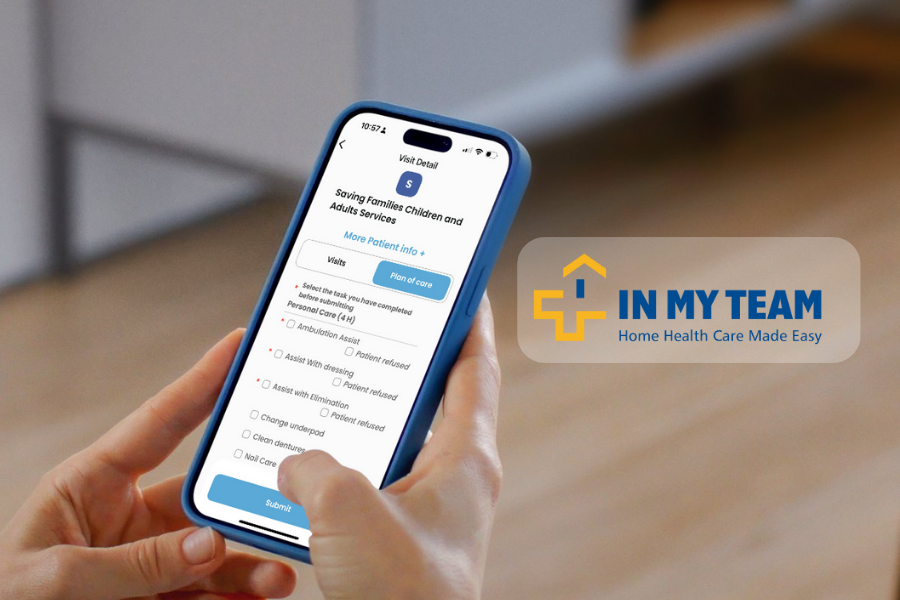
EVV Is Now a Permanent Part of Home Care
Electronic Visit Verification (EVV) has transformed the way home care agencies operate. What began as a compliance requirement under the 21st Century Cures Act has now become a foundational part of home care operations. In 2026, states continue to refine their EVV expectations, and agencies must stay ahead of the evolving rules to stay compliant, avoid claim denials, and maintain strong payer relationships.
This guide breaks down everything home care agencies need to know about EVV in 2026, including new trends, state-specific changes, compliance tips, and how modern EMRs like INMYTEAM make EVV simple and automatic.
What Is EVV and Why Does It Matter?
EVV verifies who provided care, when it happened, where it occurred, and what tasks were completed. It is required for all Medicaid-funded:
Personal care services (PCS)
Home health care services (HHCS)
The purpose of EVV is to:
Prevent fraud and abuse
Improve care transparency
Ensure accurate claims processing
Keep states aligned with federal requirements
Failure to use EVV correctly results in claim denials or payment delays, problems that can devastate small home care agencies.
The Required EVV Data Points
To be compliant, agencies must capture:
Client name
Caregiver name
Type of service performed
Date of service
Location of service (home or community)
Start and end times
Some states also require:
Visit notes
Client signatures
Voice verification
Task lists
A modern EMR should collect all of this automatically to eliminate risk.
The Two EVV Models Agencies Must Understand
1. State-Mandated EVV System
Some states require all agencies to use the same EVV provider (e.g., Sandata, HHAeXchange, eXPRS).
Pros:
Standardized compliance
State support and training
Cons:
Often outdated user experience
Requires duplicate entry if not integrated
This is why many agencies pair the state EVV system with an integrated EMR like INMYTEAM, which syncs data to prevent manual entry errors.
2. Open Vendor Model
Other states allow agencies to choose their preferred EVV vendor as long as it meets compliance rules.
Pros:
Agencies select the system that fits their workflow
Better user experience
Fewer manual steps
Cons:
Agencies must ensure the system exports correct data
INMYTEAM supports both models by integrating EVV data into scheduling, documentation, payroll, and billing workflows automatically.
EVV in 2026: What Has Changed?
As states refine EVV programs, 2026 brings several trends agencies must prepare for:
1. Stricter Enforcement of Claim Denials
States are increasingly rejecting claims when EVV data is incomplete, late, or not properly transmitted.
2. More Frequent Audits
EVV data is now part of most state audits, and agencies must produce clear, accurate logs.
3. Additional Required Data Fields in Some States
Certain states now require:
More detailed task documentation
Client acknowledgement
GPS verification
Exceptions reporting
4. Transition to Aggregators in More States
Aggregators like Sandata and Gainwell centralize EVV data and enforce standardized validation rules.
Common EVV Mistakes Agencies Must Avoid
Agencies often struggle with the same avoidable problems:
1. Caregivers forgetting to clock in/out
This leads to missing or incorrect EVV data.
2. Clock-in location discrepancies
GPS mismatches trigger visit exceptions.
3. Manual corrections without proper documentation
Auditors flag this as potential fraud.
4. Using multiple systems that don’t sync
This causes mismatched visit data and claim errors.
5. Failing to train caregivers
The majority of EVV errors occur in the field, not the office.
Tools like INMYTEAM reduce these problems by prompting clock-ins, flagging incomplete visits, and syncing data automatically.
How Modern EMRs Simplify EVV Compliance
A powerful EMR eliminates the need to chase caregivers, fix broken visits, or manually reconcile data before billing.
Systems like INMYTEAM help by:
Capturing clock-in/clock-out with GPS verification
Storing EVV data inside each visit record
Syncing EVV to state aggregators
Blocking incomplete visits from being billed
Reducing manual corrections and exceptions
Providing real-time alerts when a visit is missing EVV data
This dramatically lowers compliance risk and keeps billing flowing smoothly.
EVV Best Practices for 2026
1. Train Caregivers at Onboarding (and Reinforce Regularly)
EVV works only when caregivers understand the workflow.
2. Use a Single Integrated System
Avoid juggling multiple apps.
3. Monitor EVV Exceptions Daily
Small issues become big compliance problems when ignored.
4. Automate as Much as Possible
Let your EMR enforce rules instead of relying on human memory.
5. Document Corrections Clearly
If time or location needs adjustment, your EMR should require a reason code and notes.
The Future of EVV Beyond 2026
We expect EVV to move toward:
Fully automated verification
Predictive compliance alerts
Voice-enabled check-ins
AI-powered exception resolution
Integration with care plans to prove task completion
Systems like INMYTEAM are already moving in this direction with automated documentation support, compliance prompts, and real-time visit intelligence.
Conclusion
EVV is no longer a burdensome requirement, it’s a critical operational tool for home care. Agencies that embrace modern, integrated systems not only reduce compliance risk but also streamline scheduling, billing, and caregiver accountability.
Want an EMR that makes EVV seamless and audit-ready? Request an INMYTEAM demo today.
Want to see what others have to say about us? See our reviews here.