
2026 Medicaid Pressures: What Home Health Agencies Should Expect (Rates, Access, Policy Shifts)
Medicaid Pressure Hits Operations First
Even agencies that are primarily Medicare-based feel Medicaid pressure indirectly:
staffing competition increases
patient complexity rises
payer scrutiny expands
operational costs rise
For Medicaid-heavy agencies, the impact is direct: rate pressure, stricter documentation requirements, evolving EVV enforcement, and more audits.
In 2026, Medicaid programs are navigating ongoing budget realities while trying to maintain access to care, creating a challenging environment for providers.
This blog breaks down what agencies should expect and what to do now.
What Medicaid Pressure Looks Like in 2026
Medicaid pressure usually shows up as:
tighter reimbursement or slower increases
more utilization management
stricter EVV and documentation validation
greater program integrity focus
claims delays and denials
increased administrative burden
The agencies that survive these pressures are the ones that become operationally efficient.
What Agencies Should Expect in 2026
(Trends to Watch)
1) More Documentation Scrutiny
Medicaid claims are increasingly validated using:
EVV data
task documentation
time logs
medical necessity indicators
If documentation is incomplete or inconsistent, payment gets delayed or denied.
2) Stronger EVV Enforcement
States are continuing to tighten EVV workflows:
fewer tolerated exceptions
stricter location validation
more frequent audits
more requirements for correction notes and reason codes
EVV isn’t new, but enforcement is increasing.
3) More Program Integrity Focus
Agencies should expect:
more audit selection
deeper pattern analysis
higher scrutiny on corrections
increased interest in mismatched documentation
This is one reason agencies must maintain strong audit trails.
4) Higher Competition for Workforce
Medicaid pressure affects staffing because agencies compete for the same clinicians and caregivers. Operational friction causes staff burnout, making retention harder.
How HHAs Can Protect Revenue in 2026
Here are the moves that matter:
✅ 1) Improve documentation completeness
Reduce missing notes, missing signatures, vague narratives.
✅ 2) Align EVV + documentation + billing
No more mismatched systems.
✅ 3) Fix exceptions daily
Weekly cleanup is too slow.
✅ 4) Use modern tech to reduce admin burden
This is where systems like INMYTEAM provide leverage by automating compliance checks and supporting faster documentation.
✅ 5) Build audit readiness into workflows
Audit readiness is not a project, it’s a daily system.
Conclusion
Medicaid pressures in 2026 will reward agencies that run lean, document clean, and maintain strong compliance systems. Operational efficiency is the best defense against rate uncertainty and increased scrutiny.
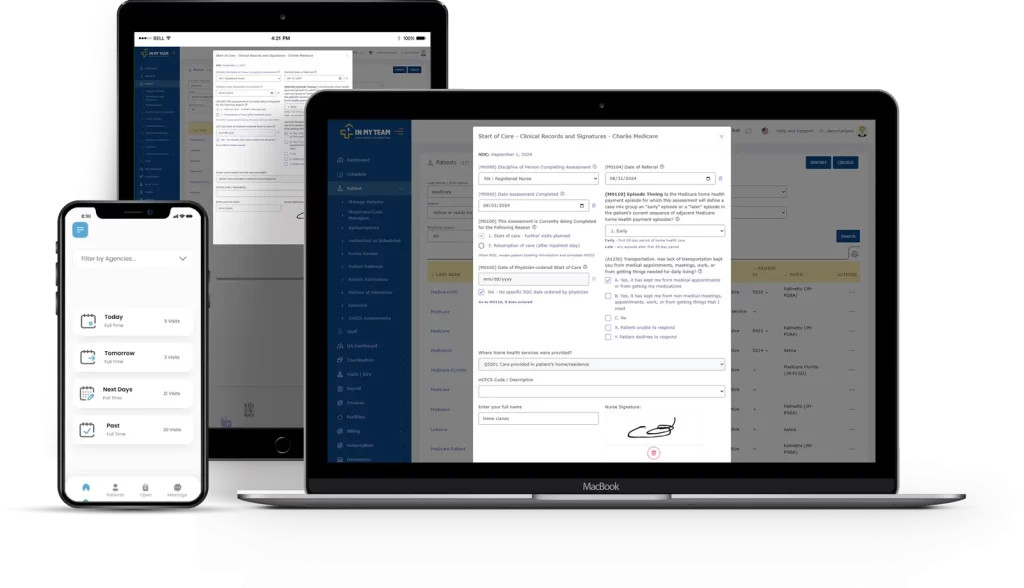
Want to reduce documentation gaps and strengthen billing readiness? Book a demo of INMYTEAM and see how modern workflows help agencies operate more efficiently in 2026.
Want to see what others have to say about us? See our reviews here.